Most people show awareness of the dangers of working with power tools and machinery, but did you know that possibly the biggest threat to those working with wood, comes not from the serious health and safety risks of power tools, but from wood dust.

The long term damage can often be caused by tiny even microscopic wood dust particles entering the lungs as you work. These particles, often called “coarse inhalable particles can range from 2-10 microns, are fine enough not to be seen by the naked eye, but they enter your lungs as you breath in the air filled with sawdust, and are small enough to enter the lungs and cause long term damage.

Are you doing everything you can to protect yourself or your workers from this very real danger?
Read more…
How Does Dust Affect The Woodworker?
Long-Term Damage: Rather than the large chips and visible sawdust: perhaps the most damaging element is the invisible fine dust – the microscopic coarse inhalable particles. These tiny bits of sawdust float around the air and linger even after the tools have stopped running. It is when these invisible particles get inhaled into the airways that they cause tiny wounds and scarring to our lungs: each time this happens it causes a very small amount of irreversible damage. Although the immediate effects would probably not be noticed, over long periods of time, this can result in significantly decreased lung capacity, and a number of other health issues.
Irritants: This is the most common way that wood dust affects a woodworker. This simply means that it can irritate our lungs, our skin, our eyes. As the body reacts to the irritant this can result in itching, sneezing, coughing, runny nose, rashes, and asthma-like breathing problems.
Sensitizers: With regular exposure to wood dust, things can develop beyond being simply irritating to the body. Some woods can make us more and more sensitive upon each successive exposure. Even if you don’t experience any sort of allergic reaction to the wood or its dust when you first come into contact with it, each time you breathe the dust, or handle the wood, with repeated exposure this can sometimes result in an eventual reaction that can be quite strong; in rashes or boils, severe sinus or respiratory pain/inflammation, or a number of other conditions depending on the wood species.
Toxins: Although this is not as common, some wood is considered to be directly toxic. Yew, is one such example of this, is capable of causing fatality in certain cases.
Carcinogens: Toxicity charts are available for wood species. That is because some wood species are known to to have been shown to cause Nasopharyngeal carcinoma or cancer.
Read on with the next blog referencing The Wood toxicity and Allergen chart from http://www.wood-database.com
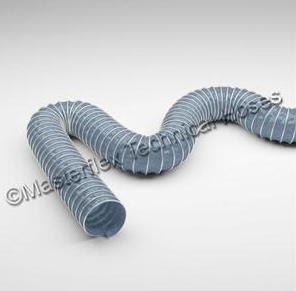
With all of the above health reasons,Masterflex Technical Hoses Ltd have produced a range of hoses to be used specifically for those working within the wood manufacturing industry; Flamex BF hose(for wood dust and fine particles) , and Flamex B(for coarser wood dust and chippings).
These reliable and high quality hoses will enable you to work without concern for the hazards described above, extracting the wood dust at source, as it is created…before it enters your lungs!
53.552097
-2.092210

![blue-back-lightning-in-a-ho[1]](https://i0.wp.com/masterflex-uk.com/_includes/external/blue-back-lightning-in-a-ho.gif)






 Masterflex Technical Hoses Ltd